
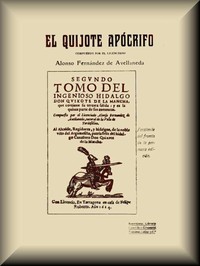
El Quijote apócrifo by Alonso Fernández de Avellaneda
Let's talk about one of the most fascinating pieces of literary history you've probably never heard of. While Miguel de Cervantes was famously slow to publish the second part of Don Quixote, a writer using the pseudonym Alonso Fernández de Avellaneda beat him to the punch in 1614. This book, El Quijote apócrifo, is that unauthorized sequel.
The Story
Avellaneda's book picks up with our familiar duo, Don Quixote and Sancho Panza, but quickly sends them in a different direction. They head to Zaragoza for new jousting tournaments, encountering a fresh cast of characters along the way. The tone is different—more critical, even mocking, of the knight and his squire. Sancho is coarser, Quixote is more of a straight-up fool, and the adventures feel like a parody of a parody. The real plot twist, however, is outside the pages: Cervantes was furious. He read it, referenced it directly in his own authentic Part Two (published in 1615), and changed his planned story to spite Avellaneda.
Why You Should Read It
This isn't just a curious footnote. Reading Avellaneda's version is thrilling because you're seeing a real-time literary fight. You can feel Cervantes's irritation in the pages of his own sequel. It makes you appreciate his genius even more. Avellaneda's book, while often considered inferior, is sharp and funny in its own right. It shows how another writer of the time interpreted these iconic characters, and it forces you to think about who really 'owns' a story once it's out in the world.
Final Verdict
This book is a must for superfans of Don Quixote who want the complete, messy, behind-the-scenes story. It's perfect for readers who love literary history, mysteries, and seeing how one great book can accidentally create another. If you've ever loved a character and wondered 'what if someone else wrote them?', here's your chance to find out. Just be sure to read Cervantes's two parts first—this apocryphal tale will mean so much more.
You are viewing a work that belongs to the global public domain. Knowledge should be free and accessible.
Joshua White
5 months agoI have to admit, the arguments are well-supported by credible references. Exceeded all my expectations.
Lisa Jones
1 year agoNot bad at all.
Patricia Wilson
1 year agoHigh quality edition, very readable.
David Moore
1 year agoFrom the very first page, the atmosphere created is totally immersive. Exactly what I needed.
Carol Torres
1 year agoThanks for the recommendation.