
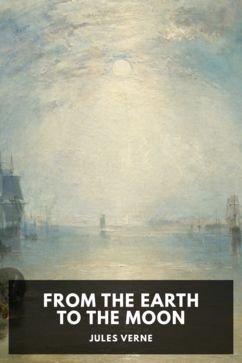
From the Earth to the Moon - Jules Verne
Jules Verne's From the Earth to the Moon is a delightful blast from the past that feels strangely modern in its audacity. Published in 1865, it's less a dry prediction and more a joyful thought experiment: what if we could reach the moon using the technology we already have?
The Story
The American Civil War has just ended, and the members of the Baltimore Gun Club—artillery experts and weapons makers—are bored. Their president, the larger-than-life Impey Barbicane, proposes a new project to channel their destructive energy: building a colossal cannon to fire a projectile to the moon. The world goes wild with the idea. They raise millions, solve insane engineering problems (like where to get 400,000 pounds of gunpowder), and even attract a rival, the French adventurer Michel Ardan, who insists on turning the bullet into a manned spaceship. The story races from boardroom debates to the frantic construction in Florida (sound familiar?) as three men volunteer for a one-way trip into the unknown. The climax isn't the landing, but the incredible, nail-biting launch itself.
Why You Should Read It
What amazed me wasn't just Verne's guesses that turned out right (like launching from Florida), but the book's spirit. It's a celebration of human curiosity and stubbornness. The characters aren't flawless heroes; they're enthusiastic, arrogant, and wonderfully obsessed. You root for them even as you laugh at their single-minded madness. Verne packs the story with real math and physics of his day, making the absurd premise feel weirdly plausible. Reading it, you get a real sense of the 19th-century belief in progress—the idea that any problem, even gravity, could be solved with enough ingenuity and gunpowder.
Final Verdict
This book is perfect for anyone who loves the roots of science fiction. It's for the reader who enjoys a great adventure story with a clever, humorous heart. If you're fascinated by the history of spaceflight and want to see where the dream started, Verne's vision is essential. It's also a surprisingly quick and fun read—more an exciting lecture from your most passionate professor than a dusty old classic. Just be prepared to smile at the sheer confidence of it all. A true gem that proves a good story, aimed right, can travel just as far as any cannon shell.
No rights are reserved for this publication. Knowledge should be free and accessible.
Nancy Hill
4 months agoGreat read!
Sandra Thomas
1 year agoSimply put, the pacing is just right, keeping you engaged. Don't hesitate to start reading.
Donna Smith
5 months agoComprehensive and well-researched.
Joshua Lewis
1 year agoThe fonts used are very comfortable for long reading sessions.



Logan Walker
9 months agoClear and concise.