About 392 minutes
The Drums of Jeopardy — Story, Setting & Ideas
Science Fiction Utopias
90,150 recorded words. 11 minutes difference from this book's estimate.
View Gutenberg source #1913
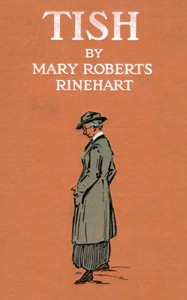
This digital edition of Tish — A Reader’s Guide is described by source-level measurements including 92,684 words, 6 hr 43 min estimated reading time, and 10 detected text sections.
The text analysis averages about 13.6 words per sentence, while the detected sections provide another way to judge how the source is divided.
Project Gutenberg metadata also associates the work with “Humorous stories, American,” connecting these edition facts with the source record’s subject description.
Explore this collection
These alternatives are selected using recorded categories and estimated reading time.
About 392 minutes
Science Fiction Utopias
90,150 recorded words. 11 minutes difference from this book's estimate.
View Gutenberg source #1913About 387 minutes
Science Fiction Utopias
88,848 recorded words. 16 minutes difference from this book's estimate.
View Gutenberg source #4217About 371 minutes
Science Fiction Utopias
85,165 recorded words. 32 minutes difference from this book's estimate.
View Gutenberg source #3240Search stored excerpts and compare books → Choose by your preferences →
Choices use stored catalog measurements. Estimates vary with reading speed. A shared category is a catalog label, not a claim that two books have the same argument or literary quality.
Search reads excerpt text stored with this catalog and links to its associated Gutenberg record. The connection is stored in the site database; this tool does not recheck that every excerpt is word-for-word identical to that external record. Excerpt search does not cover every chapter and does not verify historical publication dates.
Catalog snapshot checked: 2026-09-25. Coverage: 93 public books, 93 available source excerpts.
Read the complete public-domain text at its original source.
Read on Project GutenbergThe narrator of Tish opens by defending her friend Tish against a cartoon that showed her in khaki trousers under a racing-car—a detail she insists was inaccurate. This defensive, corrective tone sets the pattern for a chronicle in which the trio's adventures are always more chaotic than intended. The book collects several episodes, beginning with 'Mind Over Motor,' where Tish's driving ambitions lead to broken laws and broken records, and continuing through camping trips and a spy scare. The narrator, never named, speaks as a witness and co-participant, often clarifying what the press or outsiders got wrong.
The unnamed narrator functions as a constant corrective voice. She refutes the claim that Tish wore khaki trousers on a car trip—'she merely took them along in case of emergency'—and explains that Aggie fell out of the car because she sneezed, not because Tish pushed her. This framing turns each episode into a defense against public misrepresentation. The narrator never praises Tish outright; instead, she presents Tish's actions as inevitable, even when they cause trouble. Her tone is matter-of-fact, which amplifies the absurdity. She reports that Tish, learning to canoe, wore a life preserver—'Tish, of course, not the canoe'—a dry aside that characterizes both the narrator's loyalty and her wry perspective.
Throughout the excerpts, equipment fails in ways that drive the plot. The motor launch named 'Mebbe' gives 'one gasp and then dying for every hundred times somebody turned over the engine.' A leaky canoe is patched with chewing gum—'which Aggie always carried for indigestion'—and holds 'fairly well, so long as the gum lasted.' The tent collapses on the second night, the ridgepole hitting Aggie across the chest. These failures are not mere background; they are the source of the trio's improvisations. Tish responds by flinging a copy of Cooper into the river when it proves useless for addressing Indians. The narrator records each breakdown with precision, making the reader feel the cumulative weight of small disasters.
The longest excerpt involves a suspected spy, Mr. McDonald, who anchors his green canoe near the women's camp and reads all day. Tish interprets his stillness as an alibi—'How can he be a spy when we see him all day long?'—but the narrator never confirms or denies the suspicion. Instead, the comedy comes from the spy's passive obstruction: he parks opposite their bathing cove, forcing them to bathe in cold water, and accidentally traps Aggie in the water for two hours and twenty minutes when Tish takes her bathrobe. Mr. McDonald later claims he 'knew her all the time' and was uncertain if she was 'taking a cure for something or was trying to commit suicide.' The narrator reports a tapping noise from his island and Tish's conclusion—'Wireless!'—but leaves the spy's true nature unresolved.
Readers should approach Tish as a series of self-contained episodes rather than a novel with a single arc. The narrator's voice is the constant thread: she is always setting the record straight, always understating the chaos. Pay attention to what she chooses to correct—those details reveal where the real humor lies. The illustrations by May Wilson Preston, listed in the contents, likely amplify the physical comedy of the trio's predicaments.
Sometimes I think back on Tish and her friends, those tangled camping trips, and how their stubborn loyalty outweighed every mishap. It reminds me quietly of another kind of steadfastness, found in Cap'n Warren's Wards — A Closer Reading. Both feel like old photographs—slightly faded, warm at the edges, holding people who simply manage, together.
Capture what you thought, learned, and would like to remember.