About 824 minutes
Women in Love — Text and Context
Historical Social Novels
189,303 recorded words. 13 minutes difference from this book's estimate.
View Gutenberg source #4240
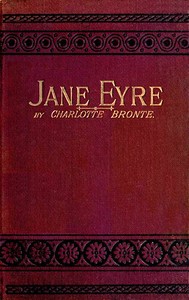
Before opening Jane Eyre: An Autobiography — Edition Insights, the edition data offers a quick orientation: 192,496 words, 13 hr 57 min estimated reading time, and 41 detected text sections.
The text analysis averages about 19.1 words per sentence, while the detected sections provide another way to judge how the source is divided.
Project Gutenberg metadata also associates the work with “Orphans -- Fiction,” connecting these edition facts with the source record’s subject description.
Explore this collection
These alternatives are selected using recorded categories and estimated reading time.
About 824 minutes
Historical Social Novels
189,303 recorded words. 13 minutes difference from this book's estimate.
View Gutenberg source #4240About 720 minutes
Historical Social Novels
165,493 recorded words. 117 minutes difference from this book's estimate.
View Gutenberg source #730About 687 minutes
Historical Social Novels
157,991 recorded words. 150 minutes difference from this book's estimate.
View Gutenberg source #2802Search stored excerpts and compare books → Choose by your preferences →
Choices use stored catalog measurements. Estimates vary with reading speed. A shared category is a catalog label, not a claim that two books have the same argument or literary quality.
Search reads excerpt text stored with this catalog and links to its associated Gutenberg record. The connection is stored in the site database; this tool does not recheck that every excerpt is word-for-word identical to that external record. Excerpt search does not cover every chapter and does not verify historical publication dates.
Catalog snapshot checked: 2026-09-25. Coverage: 93 public books, 93 available source excerpts.
Read the complete public-domain text at its original source.
Read on Project GutenbergFrom its first pages, Jane Eyre: An Autobiography establishes a narrator who is both acutely observant and fiercely independent. The opening chapters, set at Gateshead Hall, show Jane as a child who resists the tyranny of her aunt and cousins, a pattern of defiance that recurs throughout the excerpts. The catalog subjects list orphans, governesses, and charity schools, but the text itself emphasizes Jane's interiority—her drawings, her dreams, and her moral reasoning—as much as her external circumstances.
The preface to the second edition, included in this record, reveals Brontë's own defensive stance: she distinguishes conventionality from morality and self-righteousness from religion. This framing invites readers to see the novel not merely as a love story or a bildungsroman, but as a deliberate challenge to social hypocrisy.
The subtitle "An Autobiography" is not merely decorative. The excerpts show a first-person narrator who addresses the reader directly and reflects on her own past with a mixture of immediacy and hindsight. For example, when Mrs. Reed speaks of Jane as a "sickly, whining, pining thing," the adult narrator reports the speech without softening it, allowing the cruelty to stand. This technique gives the reader access to Jane's childhood emotions while also demonstrating her later composure.
The narrative voice is distinctive for its precision. Jane describes her own sketching process in detail: "I took a soft black pencil, gave it a broad point, and worked away." Such passages ground abstract emotions in concrete actions, a hallmark of Brontë's style. The voice is also unafraid to judge: the preface's attack on "the timorous or carping few" who doubt the book's tendency shows that the author—and by extension the narrator—expects resistance.
One of the most striking features of the excerpts is Jane's use of drawing as a form of mental escape. While at Gateshead, she describes sketching "fancy vignettes" from her imagination: "a glimpse of sea between two rocks; the rising moon, and a ship crossing its disk." These images are not directly tied to the plot; they serve as evidence of an inner life that cannot be suppressed by her aunt's hostility.
Later, when she sketches a face without knowing what it will be, the act becomes a metaphor for self-discovery. The resulting "broad and prominent forehead and a square lower outline" suggests a face of strength, perhaps prefiguring Mr. Rochester or even Jane herself. The catalog subject "Bildungsromans" is accurate, but the excerpts show that Jane's growth is as much imaginative as social.
The catalog includes "Mentally ill women -- Fiction," and the excerpts offer a glimpse of how this theme operates. Mrs. Reed, in her illness, speaks of dreams in which she sees her son "laid out with a great wound in his throat, or with a swollen and blackened face." This language is vivid and disturbing, linking mental disturbance to guilt and fear.
Jane's response is measured: she leaves the room when Mrs. Reed becomes excited, and later notes that the doctor "forbade everything which could painfully excite her." The narrative treats mental illness as both a medical condition and a source of gothic horror. The reader is left to wonder how this thread connects to the more famous madwoman in the attic, who is not mentioned in these excerpts but is implied by the subject heading.
Readers approaching Jane Eyre through this digital edition should pay attention to the interplay between Jane's reported speech and her silent observations. The excerpts show a narrator who is always thinking, drawing, or remembering—even when others are speaking. The preface, with its defense of "unusual" books, serves as a key to the novel's ambitions. Look for moments when the narrative pauses for a sketch or a dream; these are not digressions but windows into the character's core.
I often find Jane Eyre whispering to that other memoir—Mr. Yellowplush’s—how a voice, however plain or lowly, insists on telling its own story. Both share that stubborn, private honesty, a refusal to wear borrowed airs. They sit together on my shelf like old friends who never met, yet understand each other perfectly. The Memoirs of Mr. Charles J. Yellowplush — Key Ideas to Explore keeps that same truthful company.
A brief reflection can help important ideas stay with you longer.