About 1,518 minutes
Martin Chuzzlewit — Background and Themes
Historical Social Novels
349,105 recorded words. 2 minutes difference from this book's estimate.
View Gutenberg source #968
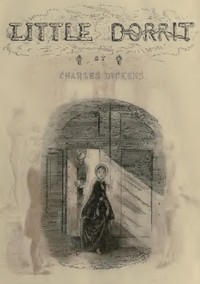
Little Dorrit — Reading Companion can be approached with a clearer sense of reading commitment from its source measurements: 348,588 words, 25 hr 16 min estimated reading time, and 37 detected text sections.
The text analysis averages about 19.9 words per sentence, while the detected sections provide another way to judge how the source is divided.
Project Gutenberg metadata also associates the work with “London (England) -- Fiction,” connecting these edition facts with the source record’s subject description.
Explore this collection
These alternatives are selected using recorded categories and estimated reading time.
About 1,518 minutes
Historical Social Novels
349,105 recorded words. 2 minutes difference from this book's estimate.
View Gutenberg source #968About 1,590 minutes
Historical Social Novels
365,486 recorded words. 74 minutes difference from this book's estimate.
View Gutenberg source #1023About 1,441 minutes
Historical Social Novels
331,205 recorded words. 75 minutes difference from this book's estimate.
View Gutenberg source #4397Search stored excerpts and compare books → Choose by your preferences →
Choices use stored catalog measurements. Estimates vary with reading speed. A shared category is a catalog label, not a claim that two books have the same argument or literary quality.
Search reads excerpt text stored with this catalog and links to its associated Gutenberg record. The connection is stored in the site database; this tool does not recheck that every excerpt is word-for-word identical to that external record. Excerpt search does not cover every chapter and does not verify historical publication dates.
Catalog snapshot checked: 2026-09-25. Coverage: 93 public books, 93 available source excerpts.
Read the complete public-domain text at its original source.
Read on Project GutenbergDickens opens Little Dorrit with a chapter titled “Sun and Shadow,” immediately establishing a visual and moral polarity that runs through the novel. The Marshalsea Prison, where William Dorrit has been confined for decades, is both a literal cage and a source of paradoxical status—he is known as “the Father of the Marshalsea,” a title that confers a kind of dignity within the walls. The excerpts show how the prison’s physical and psychological boundaries extend beyond its gates: characters carry its atmosphere into the outside world, and the language of confinement permeates descriptions of London itself.
The title “Little Dorrit” is itself a puzzle within the story. Flora Finching, in a breathless farewell, calls it “that strangest of denominations at any time I never did myself and now I never shall!” The name is not simply a term of endearment; it marks Amy Dorrit as permanently childlike, even as she shoulders adult responsibilities. Dickens reinforces this through the novel’s structure: Book the First is subtitled “Poverty” and Book the Second “Riches,” yet Amy’s identity remains tied to the prison. When Arthur Clennam tells her she will soon ride in her own carriage, she looks frightened—the prospect of leaving the Marshalsea behind is as disorienting as the confinement itself. The name “Little Dorrit” persists even after the family’s fortune changes, suggesting that social labels outlast material conditions.
Dickens renders the Marshalsea as a closed community with its own communication networks. When Arthur and Amy bring news of William Dorrit’s impending release, the information spreads with remarkable speed: “Within a few minutes, it was heard in the remotest room in the College.” The word “College” is the prisoners’ own euphemism for the jail, and the whisper that “the Father was going to get his discharge” passes from the Lodge steps to every corner. This scene demonstrates how the prison generates its own social order and rumor mill. Mr. Chivery, the turnkey, and the “Collegians” form a group that spontaneously interprets the visitors’ faces—they “perceived that they had come back accompanied by a ghost a-piece.” The ghost metaphor hints at the uncanny nature of freedom for those who have lived so long inside.
Dickens repeatedly juxtaposes the cramped, squalid streets near the Marshalsea with the imagined grandeur of the Dorrits’ future. As Amy and Arthur ride through “the old squalid streets,” Amy feels “a sensation of being raised out of them into an airy world of wealth and grandeur.” The carriage becomes a transitional space between two realities. Arthur deliberately keeps William Dorrit’s image before her—he “kept that single figure before her”—so that her happiness focuses on her father’s elevation rather than her own dislocation. The physical journey mirrors the emotional one: they ride “brightly through the poor streets in the prison neighbourhood,” but the brightness is borrowed from the news they carry. The setting itself—the prison neighborhood—remains unchanged, a reminder that the city contains both sun and shadow.
Readers attentive to Dickens’s chapter titles will notice how often they pair opposites: “Sun and Shadow,” “Appearance and Disappearance,” “Something Wrong Somewhere” and “Something Right Somewhere.” These binaries are not merely decorative; they structure the novel’s moral geography. The excerpts offer a concentrated view of how news, identity, and setting interact in a single pivotal moment. Pay particular attention to the way minor characters—Mr. Chivery, the Collegians—function as a chorus, reflecting and shaping the main action through their collective gaze.
I’ve spent many evenings with Little Dorrit, watching how the Marshalsea’s walls follow the family even into wealth. It reminds me of another solitary soul, Jane Eyre, whose own confinements—of circumstance, of spirit—shaped her quiet defiance. Both books whisper of the cages we carry inward, and I often find them side by side on my shelf, speaking to each other. Jane Eyre: An Autobiography — Edition Insights sits nearby, a familiar neighbor in that long, hushed conversation.
A brief reflection can help important ideas stay with you longer.