About 271 minutes
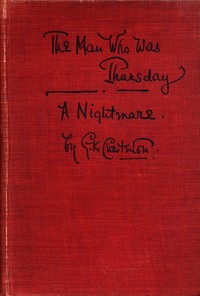
The Man Who Was Thursday: A Nightmare — Themes and Context
Fantasy Juvenile Worlds
62,197 recorded words. 8 minutes difference from this book's estimate.
View Gutenberg source #1695
Before opening Pollyanna — A Reader’s Guide, the edition data offers a quick orientation: 60,313 words, 4 hr 23 min estimated reading time, and 9 detected text sections.
The text analysis averages about 13.0 words per sentence, while the detected sections provide another way to judge how the source is divided.
Project Gutenberg metadata also associates the work with “Orphans -- Juvenile fiction,” connecting these edition facts with the source record’s subject description.
Explore this collection
These alternatives are selected using recorded categories and estimated reading time.
About 271 minutes
Fantasy Juvenile Worlds
62,197 recorded words. 8 minutes difference from this book's estimate.
View Gutenberg source #1695About 307 minutes
Fantasy Juvenile Worlds
70,459 recorded words. 44 minutes difference from this book's estimate.
View Gutenberg source #1158About 319 minutes
Fantasy Juvenile Worlds
73,161 recorded words. 56 minutes difference from this book's estimate.
View Gutenberg source #2770Search stored excerpts and compare books → Choose by your preferences →
Choices use stored catalog measurements. Estimates vary with reading speed. A shared category is a catalog label, not a claim that two books have the same argument or literary quality.
Search reads excerpt text stored with this catalog and links to its associated Gutenberg record. The connection is stored in the site database; this tool does not recheck that every excerpt is word-for-word identical to that external record. Excerpt search does not cover every chapter and does not verify historical publication dates.
Catalog snapshot checked: 2026-09-25. Coverage: 93 public books, 93 available source excerpts.
Read the complete public-domain text at its original source.
Read on Project GutenbergFrom its first sentence, Pollyanna establishes a friction between deliberate composure and disruptive energy. Miss Polly Harrington enters her kitchen “a little hurriedly,” a detail the narrator immediately undercuts by noting she “specially prided herself on her repose of manner.” This early contradiction—a woman who values stillness yet betrays haste—sets the pattern for a novel built around controlled surfaces and the pressures that unsettle them. The kitchen, Nancy’s domain of washing and wiping, becomes the stage for a power dynamic where even a paused dishcloth can signal defiance or incompetence. Porter’s prose lingers on small gestures: the pitcher nearly tipped, the cloth left wrapped around it, the flush of embarrassment. These are not merely atmospheric; they are the novel’s way of showing how order is maintained through tiny, repeated acts of correction.
The attic room Pollyanna is assigned is more than a setting; it is a physical expression of Miss Polly’s worldview. Bare, hot, and lacking a mirror, it strips away comfort and reflection—literally. When Pollyanna later marvels at her aunt’s windblown curls, she exclaims, “And I never knew you had 'em! Can folks have 'em when you don't know they've got 'em?” The question is not naive; it points to a household where even natural attributes are suppressed until accidentally revealed. The attic’s spareness is a deliberate counterpoint to the “darling little black curls” that escape Miss Polly’s pins. Porter uses space to encode character: Miss Polly’s house, like her manner, is designed to contain and conceal. Pollyanna’s joy at the curls is a recognition that something has slipped past the architecture of restriction.
The “glad game” is often read as simple optimism, but in the excerpts it functions as a tool for reinterpreting authority. When Pollyanna tells Nancy, “You do play the game so funny, sometimes,” she is not just correcting a rule; she is asserting a different logic. The game allows her to reframe her aunt’s commands—such as the instruction about the jelly—without outright defiance. Miss Polly’s sharp correction (“a very different matter from TELLING him outright”) reveals the gap between literal obedience and the spirit of compliance. Pollyanna’s confusion (“I don't see where the difference is”) is not stupidity but a genuine collision of two systems: one that values precise social performance, and one that values transparent intent. The game becomes a quiet negotiation of power, where Pollyanna’s cheerful reinterpretation can both follow and subvert.
Porter’s dialogue often carries more than its surface meaning. When Miss Polly asks, “Who was that man—the one who drove into the yard, Pollyanna?” the question is posed “a little sharply,” but the sharpness masks curiosity. Pollyanna’s answer—“Why, Aunt Polly, that was Dr. Chilton! Don't you know him?”—is a factual reply that also exposes a social awkwardness. The exchange about the jelly is a masterclass in indirection: Miss Polly wants credit for not sending it, but not for saying she didn’t. The narrative voice, meanwhile, stays close to Pollyanna’s perspective, noting that she “sighed” and “opened wide her eyes.” These small physical cues—the sigh, the wide eyes, the flushed cheeks—carry the emotional weight that the characters’ words often evade. Porter lets the reader see what the characters do not say aloud.
Readers attentive to the novel’s texture will find that its pleasures lie less in the plot’s resolution than in the small, repeated collisions between intention and interpretation. The attic room, the misplaced jelly, the windblown hair—each is a moment where control falters and something genuine emerges. Porter’s craft is in making these falterings feel both inevitable and revelatory. Approach Pollyanna not as a simple tale of cheerfulness, but as a study in how people manage the gap between what they show and what they feel.
Reading this guide to Pollyanna, I remembered the attic room’s spareness—how Miss Polly’s control felt like a locked drawer. It reminded me of the Pepper children’s cramped cottage, where poverty forced a similar rigidity, yet warmth crept through cracks. That same quiet ache rose in me with Five Little Peppers and How They Grew — Reading Companion, a book that let me sit with that tension longer, without needing to resolve it.
Capture what you thought, learned, and would like to remember.