About 488 minutes
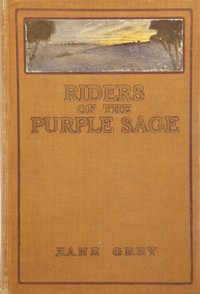
Riders of the Purple Sage — Inside the Classic
Fantasy Juvenile Worlds
112,013 recorded words. 18 minutes difference from this book's estimate.
View Gutenberg source #1300
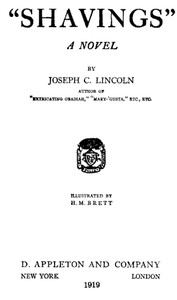
The catalog record for Shavings: A Novel — Story, Setting & Ideas provides practical reading context through 116,224 words, 8 hr 26 min estimated reading time, and 14 detected text sections.
The text analysis averages about 11.9 words per sentence, while the detected sections provide another way to judge how the source is divided.
Project Gutenberg metadata also associates the work with “Man-woman relationships -- Fiction,” connecting these edition facts with the source record’s subject description.
Explore this collection
These alternatives are selected using recorded categories and estimated reading time.
About 488 minutes
Fantasy Juvenile Worlds
112,013 recorded words. 18 minutes difference from this book's estimate.
View Gutenberg source #1300About 581 minutes
Fantasy Juvenile Worlds
133,623 recorded words. 75 minutes difference from this book's estimate.
View Gutenberg source #2048About 422 minutes
Fantasy Juvenile Worlds
96,855 recorded words. 84 minutes difference from this book's estimate.
View Gutenberg source #2786Search stored excerpts and compare books → Choose by your preferences →
Choices use stored catalog measurements. Estimates vary with reading speed. A shared category is a catalog label, not a claim that two books have the same argument or literary quality.
Search reads excerpt text stored with this catalog and links to its associated Gutenberg record. The connection is stored in the site database; this tool does not recheck that every excerpt is word-for-word identical to that external record. Excerpt search does not cover every chapter and does not verify historical publication dates.
Catalog snapshot checked: 2026-09-25. Coverage: 93 public books, 93 available source excerpts.
Read the complete public-domain text at its original source.
Read on Project GutenbergThe novel opens with Gabriel Bearse, a man never happy unless talking, hurrying to spread a juicy bit of gossip. His weapon is not a gun but a 'vocal machine gun' loaded with news. The scene immediately establishes Orham as a community where talk is currency and secrets are ammunition. Gabriel's eagerness is interrupted by a row of toy windmills—dozens of them, clattering on a picket fence, alongside wooden sailors, weather vanes shaped like whales and swordfish, and circling sailboats. These are the creations of Jed Winslow, the toymaker known as 'Shavings.' The windmills are not just decorations; they are the first hint of a world where handmade objects carry meaning, and where silence can be as powerful as speech.
The excerpts reveal a central tension around concealed knowledge. Jed Winslow is entrusted with a secret: Ruth's brother Charles has been a convict. Ruth asks Jed to hide this from everyone, including Charles himself, to ease his return. Jed agrees, but the burden shows in his hesitation: 'He looked a little troubled, but he nodded.' The narrative tracks the cost of this silence. When Charles arrives, Jed watches from his shop window, feeling 'a trifle blue' and 'just a little jealous'—not of the brother, but of the happiness Ruth gains from his presence, a happiness Jed cannot share. The secret creates a barrier even as it binds them.
Lincoln fills the novel with crafted things that carry emotional weight. The windmills, the wooden sailors, the profile sailboats chasing each other—these are not mere props. They are Jed's language. When he is troubled, he returns to his drawing of a gull. The toys are also a source of local identity: Gabriel's gossip is derailed by the sight of them. The description of the fence lined with whirling mills suggests a boundary that is both literal and symbolic—between public and private, between what is said and what is made. The objects invite the reader to consider what it means to create something that outlasts a spoken word.
The dialogue in the excerpts is marked by what is left unsaid. Ruth calls Jed 'Mr. Winslow,' then corrects herself to 'Jed,' but he never calls her by her first name; he says 'Mrs. Ruth.' This small verbal dance reveals their relationship—formal, careful, weighted with unspoken feeling. When Jed says 'I understand, I cal'late,' the colloquial 'cal'late' signals his Cape Cod roots, while his understanding is deeper than his words. The novel's voice shifts between Gabriel's rapid-fire gossip and Jed's slow, deliberate speech. This contrast suggests that in Orham, the most important conversations happen in the pauses.
Readers will find that Shavings rewards attention to its small details—the way a character hesitates before speaking, the clatter of a windmill, the shape of a gull drawn in pencil. The novel does not rush to reveal its secrets; it lets them accumulate like shavings on a workshop floor. Pay particular attention to the scenes set in Jed's shop, where the boundary between maker and made begins to blur.
That rainy afternoon, Lincoln’s Shavings left me thinking about how quietly a secret can reshape a whole town’s weather. I closed it, restless, and reached for something lighter on the shelf. The accidental find was Indiscretions of Archie — A Reader’s Guide, and its gentle humor felt like the same sun breaking through. Both books linger on human folly, but with warmth, not judgment.
Create a short personal record of your experience with this book.