About 506 minutes
Shavings: A Novel — Story, Setting & Ideas
Fantasy Juvenile Worlds
116,224 recorded words. 75 minutes difference from this book's estimate.
View Gutenberg source #2452
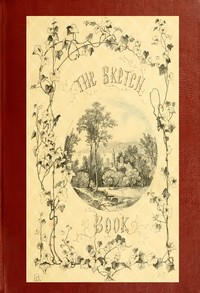
Before opening The Sketch-Book of Geoffrey Crayon — Context and Discussion, the edition data offers a quick orientation: 133,623 words, 9 hr 41 min estimated reading time, and 16 detected text sections.
The text analysis averages about 30.1 words per sentence, while the detected sections provide another way to judge how the source is divided.
Project Gutenberg metadata also associates the work with “Irving, Washington, 1783-1859 -- Travel -- England,” connecting these edition facts with the source record’s subject description.
Explore this collection
These alternatives are selected using recorded categories and estimated reading time.
About 506 minutes
Fantasy Juvenile Worlds
116,224 recorded words. 75 minutes difference from this book's estimate.
View Gutenberg source #2452About 488 minutes
Fantasy Juvenile Worlds
112,013 recorded words. 93 minutes difference from this book's estimate.
View Gutenberg source #1300About 422 minutes
Fantasy Juvenile Worlds
96,855 recorded words. 159 minutes difference from this book's estimate.
View Gutenberg source #2786Search stored excerpts and compare books → Choose by your preferences →
Choices use stored catalog measurements. Estimates vary with reading speed. A shared category is a catalog label, not a claim that two books have the same argument or literary quality.
Search reads excerpt text stored with this catalog and links to its associated Gutenberg record. The connection is stored in the site database; this tool does not recheck that every excerpt is word-for-word identical to that external record. Excerpt search does not cover every chapter and does not verify historical publication dates.
Catalog snapshot checked: 2026-09-25. Coverage: 93 public books, 93 available source excerpts.
Read the complete public-domain text at its original source.
Read on Project GutenbergWashington Irving's The Sketch-Book of Geoffrey Crayon, Gent. opens with a narrator who presents himself as a 'mere spectator of other men's fortunes and adventures,' a stance that shapes the book's varied pace and tone. The persona of Geoffrey Crayon allows Irving to move between light, anecdotal sketches and more elaborately descriptive passages, often within the same piece. The prose in 'The Voyage' is measured and contemplative, while 'Rip Van Winkle' adopts a folkloric rhythm, with long, winding sentences that mimic the tale's timeless quality. This variability in narrative speed is one of the collection's defining features, as Crayon lingers over scenes of English rural life or quickens the tempo during moments of social comedy.
Geoffrey Crayon's self-description as a 'mere spectator' is not merely a framing device; it directly influences the pacing of the sketches. In 'The Author's Account of Himself,' the narrator adopts a leisurely, almost meandering tone, pausing to reflect on his motives for travel. This unhurried quality recurs in 'Rural Life in England,' where the prose slows to accommodate detailed observations of landscape and custom. Conversely, when Crayon recounts an anecdote or a tale, the pace quickens. In 'The Spectre Bridegroom,' the narrative moves briskly through the setup of the ghost story, only to slow again during the descriptive passages of the castle. This alternation between reflective and narrative modes gives the collection a rhythm that feels organic to the persona of a curious traveler jotting down impressions.
Irving varies his sentence structure to match the mood of each sketch. In 'The Voyage,' long, periodic sentences build a sense of anticipation: 'The vast space of waters that separates the hemispheres is like a blank page in existence.' The syntax here is deliberate, mirroring the slow crossing of the Atlantic. In contrast, 'The Boar's Head Tavern, Eastcheap' employs shorter, more clipped sentences to evoke the bustle of a London inn: 'The old tavern is gone. The locality is still marked.' This shift in rhythm is not arbitrary; it reflects Crayon's emotional engagement with his subject. When he is nostalgic or reverent, as in 'Westminster Abbey,' the sentences grow longer and more ornate. When he is amused or ironic, as in 'John Bull,' the prose becomes sharper and more direct.
The two most famous tales in the collection, 'Rip Van Winkle' and 'The Legend of Sleepy Hollow,' demonstrate Irving's mastery of pacing within a folkloric frame. 'Rip Van Winkle' begins with a slow, almost static description of the Catskill Mountains and the character's idle habits, then accelerates into the supernatural encounter with the ghostly crew. The passage of twenty years is compressed into a few paragraphs, creating a disorienting shift in tempo that mirrors Rip's own confusion. 'The Legend of Sleepy Hollow' employs a similar structure: a leisurely introduction to the setting and characters, a gradual buildup of tension through Ichabod Crane's courtship and the tales of the Headless Horseman, and a rapid, climactic chase. Irving's control of pace in these stories—lingering on detail, then suddenly quickening—enhances their eerie, folkloric quality.
Readers approaching The Sketch-Book may find it useful to attend to the narrator's shifting moods, as the pace of the prose often signals Crayon's attitude toward his subject. The collection rewards those who read it not as a unified novel but as a series of experiments in voice and tempo. Noticing when Irving slows down to describe a landscape or speeds up to deliver a punchline can reveal the craft behind the seemingly casual sketches.
Reading Irving’s Crayon again, I kept noticing how quietly he lets a place tell its own story—no rush, just observation. It reminded me of a different world, the Pennsylvania Dutch countryside in Tillie, a Mennonite Maid; a Story of the Pennsylvania Dutch — Background and Themes, where the same unhurried, rooted feeling lingers, like remembering a warm kitchen after rain.
Answer a few questions and save a private reflection on this device.