About 524 minutes
The Trumpet-Major — Story, Setting & Ideas
Historical Social Novels
120,383 recorded words. 1 minutes difference from this book's estimate.
View Gutenberg source #2864
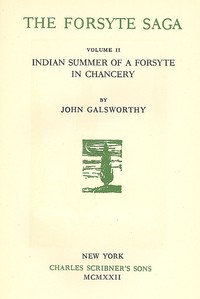
The catalog record for The Forsyte saga, Volume 2 — Edition Insights provides practical reading context through 120,167 words, 8 hr 43 min estimated reading time, and 48 detected text sections.
The text analysis averages about 15.0 words per sentence, while the detected sections provide another way to judge how the source is divided.
Project Gutenberg metadata also associates the work with “England -- Social life and customs -- 19th century -- Fiction,” connecting these edition facts with the source record’s subject description.
Explore this collection
These alternatives are selected using recorded categories and estimated reading time.
About 524 minutes
Historical Social Novels
120,383 recorded words. 1 minutes difference from this book's estimate.
View Gutenberg source #2864About 526 minutes
Historical Social Novels
120,948 recorded words. 3 minutes difference from this book's estimate.
View Gutenberg source #2453About 528 minutes
Historical Social Novels
121,407 recorded words. 5 minutes difference from this book's estimate.
View Gutenberg source #2834Search stored excerpts and compare books → Choose by your preferences →
Choices use stored catalog measurements. Estimates vary with reading speed. A shared category is a catalog label, not a claim that two books have the same argument or literary quality.
Search reads excerpt text stored with this catalog and links to its associated Gutenberg record. The connection is stored in the site database; this tool does not recheck that every excerpt is word-for-word identical to that external record. Excerpt search does not cover every chapter and does not verify historical publication dates.
Catalog snapshot checked: 2026-09-25. Coverage: 93 public books, 93 available source excerpts.
Read the complete public-domain text at its original source.
Read on Project GutenbergVolume 2 of The Forsyte Saga opens with old Jolyon Forsyte sitting under an oak tree at Robin Hill, waiting for midges to bite him before abandoning the afternoon. This small, precise detail—the waiting, the midges, the deliberate postponement of departure—establishes a pattern of suspended time that runs through the book. The narrative moves between the controlled interiors of London houses and the expansive grounds of Robin Hill, each setting carrying its own emotional weather. The dog Balthasar, lying at old Jolyon's feet, and the doll Duffer Alice, slumped in disgrace on a swing, become recurring presences that quietly register the human dramas unfolding around them.
The opening scene of old Jolyon waiting for midges is not merely atmospheric; it introduces a structural principle. Characters throughout this volume find themselves in states of suspension: Soames waits for Irene to return, Jolyon waits to understand his own feelings, and the legal term 'in chancery' itself denotes a condition of being held in abeyance. The chapter titles reinforce this—'Soames Prepares to Take Steps,' 'Jolyon in Two Minds,' 'Suspended Animation'—each marking a pause before action. Galsworthy builds tension not through rapid plot advancement but through the accumulation of these waiting moments, where characters scrutinize their own reflections, reconsider past injuries, and calculate future moves. The narrative rhythm alternates between interior monologue and social scene, but the dominant pulse is one of held breath.
Two objects appear with notable regularity: the dog Balthasar and the doll Duffer Alice. Balthasar, described as 'a woolly brown-and-white dog trying to be a Pomeranian,' undergoes a shift from 'primal aversion' to attachment with old Jolyon, mirroring the larger theme of changed relationships. The doll, perpetually 'in disgrace,' sits on the swing with her nose buried in a black petticoat, a comic but persistent emblem of neglect and fallen status. These objects do not speak, but their repeated presence creates a quiet commentary on the human action. When Soames buys a diamond brooch for Irene—'four twenty-five and dirt cheap'—the contrast between the inert, expensive object and the living, disregarded doll sharpens the reader's sense of what is being offered and what is being overlooked. Galsworthy uses such details to ground emotional conflicts in tangible things.
The narrative shuttles between London interiors—Timothy's house, James's dining room, Soames's office—and the rural setting of Robin Hill. Each location carries its own code: the city is the realm of business, legal strategy, and family obligation, where Soames 'got through a vast amount of work, only soother of the nerves he knew.' Robin Hill, by contrast, is associated with old Jolyon's serene waiting, the swing, and the dog. Yet the boundary is not absolute. Soames travels to Robin Hill to confront the past, and the natural world intrudes into London only as a memory or a desire. The chapter 'Richmond Park' suggests a middle ground, a managed nature where characters can walk and talk outside the walls of the house. This geographical oscillation reinforces the central conflict between possession and freedom, duty and inclination.
Galsworthy's prose consistently blurs the line between people and property. Soames regards Irene's return as a 'simple solution,' a matter of offering 'a liberal settlement' and a diamond brooch. His self-scrutiny is described in terms of appraisal: 'He often scrutinised his image... he had a certain belief in his own appearance—not unjustly, for it was well-coupled and preserved.' The language of the marketplace—'dirt cheap,' 'at the money,' 'happy to exchange'—seeps into his thoughts about marriage. Even the dog Balthasar is introduced with a commercial qualifier ('trying to be a Pomeranian'). This lexical habit reveals a world where human relationships are continually measured against standards of value and exchange. The legal framework of 'in chancery' extends beyond the courtroom to become a metaphor for all bonds that are contested, stalled, or held in trust.
Readers approaching this volume will find that its power lies less in dramatic incident than in the accumulation of small, telling details: a cigar held in long-nailed fingers, a doll left in disgrace, a brooch bought with uneasy hope. The narrative rewards attention to its own rhythms—the pauses, the returns, the objects that reappear. Pay particular notice to how characters occupy space: who sits, who stands, who waits at a window. These physical positions often reveal more than their spoken words.
There’s something about the quiet witnesses in Volume 2—Balthasar padding through empty rooms, the doll left mid-scene—that reminds me how much of our lives happens on edges, unobserved. It’s why I keep returning to The Black Robe — A Reader’s Guide, which has the same patient eye for silences. Some books don’t insist; they just wait, and I’m glad I was there.
Capture what you thought, learned, and would like to remember.