About 442 minutes
To the Last Man — A Reader’s Guide
Historical Social Novels
101,594 recorded words. 4 minutes difference from this book's estimate.
View Gutenberg source #2070
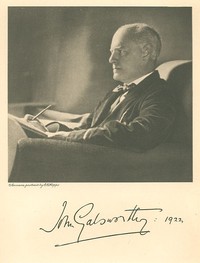
The catalog record for The Forsyte saga, Volume 3 — Background and Themes provides practical reading context through 100,642 words, 7 hr 18 min estimated reading time, and 13 detected text sections.
The text analysis averages about 14.2 words per sentence, while the detected sections provide another way to judge how the source is divided.
Project Gutenberg metadata also associates the work with “England -- Social life and customs -- 19th century -- Fiction,” connecting these edition facts with the source record’s subject description.
Explore this collection
These alternatives are selected using recorded categories and estimated reading time.
About 442 minutes
Historical Social Novels
101,594 recorded words. 4 minutes difference from this book's estimate.
View Gutenberg source #2070About 432 minutes
Historical Social Novels
99,219 recorded words. 6 minutes difference from this book's estimate.
View Gutenberg source #3146About 430 minutes
Historical Social Novels
98,680 recorded words. 8 minutes difference from this book's estimate.
View Gutenberg source #4552Search stored excerpts and compare books → Choose by your preferences →
Choices use stored catalog measurements. Estimates vary with reading speed. A shared category is a catalog label, not a claim that two books have the same argument or literary quality.
Search reads excerpt text stored with this catalog and links to its associated Gutenberg record. The connection is stored in the site database; this tool does not recheck that every excerpt is word-for-word identical to that external record. Excerpt search does not cover every chapter and does not verify historical publication dates.
Catalog snapshot checked: 2026-09-25. Coverage: 93 public books, 93 available source excerpts.
Read the complete public-domain text at its original source.
Read on Project GutenbergThe opening of Awakening introduces little Jon Forsyte on the stairway at Robin Hill, bathed in July sunlight. The narrative voice is playful, detailing his deliberation over how to descend—a moment that establishes both the child’s perspective and the novel’s interest in the inner lives of its characters. The prose is precise: Jon’s frown is caused by the problem of choosing a method, and the description of his hair “shining” and his “blue-linen-suited” figure signals a world of comfort and observation. This beginning invites the reader into a consciousness that is both innocent and self-aware, a quality that will be tested as the story progresses.
The opening excerpt establishes Jon as a child caught between convention and invention. His real name is Jolyon, but he has tried spelling it “Jhon” and “John” before settling on “Jon.” This detail is more than whimsy; it hints at the weight of family names and the struggle to define oneself within a lineage. The narrative notes that his father and dead half-brother had “usurped” the shortenings Jo and Jolly, suggesting that even names are contested territory. The reader is thus primed to see Jon as a character navigating inherited expectations, a theme that will deepen as the story unfolds.
In the middle excerpt, the conversation between Jon and Fleur reveals the central conflict: a hidden history between their families. Fleur says, “I believe my father wanted to marry your mother, and your father got her instead.” This direct statement, based on a photograph she found, introduces the idea that the past is not dead but actively shaping the present. Jon’s response—”Not if she loved my father best”—shows his idealism, while Fleur’s skepticism—”I don’t think we know much about our fathers and mothers”—underscores the gap between generations. The dialogue is taut, each line carrying the weight of unspoken events.
The journey to Robin Hill is described with sensory detail: the train carriage is “dusty and sun-warmed,” the lane smells of “dust and honeysuckle.” This pastoral setting contrasts with the tension of the secret visit. When Jon and Fleur encounter Irene in the coppice, the shock is registered not through dramatic action but through Jon’s sense of “personal dignity” wounded. The narrative shifts to his shame at having “sneaked her in.” The setting—the log seat, the larches—becomes the stage for a confrontation that is quiet but seismic. The reader sees that the landscape of Robin Hill is not neutral; it is charged with memory and ownership.
Throughout these excerpts, the narrative voice maintains a detached, almost anthropological observation of the characters. Jon’s thoughts are rendered in free indirect style, but the prose often steps back to comment on the “Forsytes great and small” or the “god of property.” This dual perspective—intimate yet ironic—guides the reader to see both the characters’ emotions and the social forces that constrain them. The opening’s playful catalog of stair-descending methods and the later, more somber reflections on family history are linked by this consistent narrative stance. It invites the reader to watch the characters as they watch themselves.
As you read Volume 3, pay attention to how Galsworthy uses small, concrete details—a frown, a photograph, a train journey—to open up larger questions about love, loyalty, and inheritance. The narrative never explains everything at once; it lets the reader piece together the past from fragments. Trust the precision of the prose and the weight of what is left unsaid. The story unfolds not in grand declarations but in the spaces between words.
This note about the Forsytes’ slow unravelling of family feeling—wonder giving way to resentment—reminded me of my grandfather’s half-finished stories, so much left unsaid between us. That hollow ache of inherited distance surfaced again in The Trumpet-Major — Story, Setting & Ideas, where quiet pride and missed chances settle like dust on a windowsill. Some histories simply breathe beside you, never fully spoken.
Create a short personal record of your experience with this book.