About 523 minutes
The Forsyte saga, Volume 2 — Edition Insights
Historical Social Novels
120,167 recorded words. 15 minutes difference from this book's estimate.
View Gutenberg source #2594
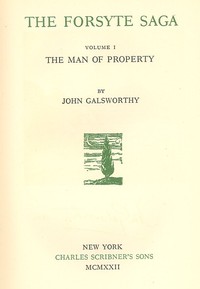
The Forsyte saga, Volume 1 — Context and Discussion can be approached with a clearer sense of reading commitment from its source measurements: 116,822 words, 8 hr 28 min estimated reading time, and 35 detected text sections.
The text analysis averages about 18.7 words per sentence, while the detected sections provide another way to judge how the source is divided.
Project Gutenberg metadata also associates the work with “England -- Social life and customs -- 19th century -- Fiction,” connecting these edition facts with the source record’s subject description.
Explore this collection
These alternatives are selected using recorded categories and estimated reading time.
About 523 minutes
Historical Social Novels
120,167 recorded words. 15 minutes difference from this book's estimate.
View Gutenberg source #2594About 524 minutes
Historical Social Novels
120,383 recorded words. 16 minutes difference from this book's estimate.
View Gutenberg source #2864About 526 minutes
Historical Social Novels
120,948 recorded words. 18 minutes difference from this book's estimate.
View Gutenberg source #2453Search stored excerpts and compare books → Choose by your preferences →
Choices use stored catalog measurements. Estimates vary with reading speed. A shared category is a catalog label, not a claim that two books have the same argument or literary quality.
Search reads excerpt text stored with this catalog and links to its associated Gutenberg record. The connection is stored in the site database; this tool does not recheck that every excerpt is word-for-word identical to that external record. Excerpt search does not cover every chapter and does not verify historical publication dates.
Catalog snapshot checked: 2026-09-25. Coverage: 93 public books, 93 available source excerpts.
Read the complete public-domain text at its original source.
Read on Project GutenbergThe Forsyte Saga opens not with a character but with a house: the narrative immediately establishes property as the central organizing principle of the Forsyte world. The first chapter, 'At Home' at Old Jolyon's, introduces the family through their possessions—the carriage, the opera box, the silver—and their proprietary attitudes toward people. Galsworthy's prose moves between intimate domestic scenes and sweeping social tableaux, using the family's gatherings as a stage for unspoken conflicts.
The structure of Volume 1 is built around a series of set pieces: dinners, drives, dances, and the slow construction of a house at Robin Hill. Each chapter advances the plot while reinforcing the theme of ownership, whether of land, art, or spouses. The narrative voice shifts between ironic observation and sympathetic interiority, particularly in the portrayal of Soames Forsyte's rigid possessiveness and Irene's silent resistance.
The house at Robin Hill is more than a setting; it is the novel's central symbol and structural pivot. Bosinney, the architect, designs a house that embodies beauty and openness, in direct opposition to the Forsyte ideal of solid, respectable property. The chapters tracking its construction—'Projection of the House,' 'Plans of the House,' 'Progress of the House,' and 'Perfection of the House'—mirror the disintegration of Soames's marriage. As the house nears completion, the relationship between Soames, Irene, and Bosinney reaches its crisis.
Galsworthy uses the house to dramatize the conflict between art and ownership. Bosinney's design is described as 'a poem' by some, while Soames sees it as an investment. The building's physical details—the windows, the staircase, the garden—become charged with emotional meaning. The chapter 'Soames Sits on the Stairs' literalizes his exclusion from the domestic space he owns but cannot inhabit emotionally.
Throughout the novel, carriages function as mobile stages for social performance and private revelation. The excerpt describing the Forsyte equipages at the Zoo is a set piece of ironic social observation: each carriage 'seemed to roll out proudly from its wheels: I and my horses and my men you know, Indeed the whole turn-out have cost a pot.' The barouche carrying James Forsyte and his family is singled out as 'the very throne of Forsytedom,' its gloss and sparkle marking it as a 'work of art' among ordinary conveyances.
Carriages also serve as spaces of confinement and exposure. In 'Drive with Swithin,' the enclosed space of the vehicle forces intimacy between characters who would otherwise maintain distance. The movement from house to carriage to house structures many chapters, creating a rhythm of arrival, departure, and return that reinforces the family's insularity. The final chapter, 'Irene's Return,' likely involves a carriage journey that completes the novel's circular pattern.
Two key scenes are set in public gardens: the Zoo and the Botanical Gardens. These natural spaces become arenas for the display of social hierarchies and the eruption of suppressed desires. At the Zoo, the Forsytes observe animals in cages, a parallel to their own caged existences. The chapter 'Old Jolyon at the Zoo' juxtaposes the family's parade of carriages with the caged beasts, suggesting that the Forsytes are themselves trapped by convention.
The 'Meeting at the Botanical' is a turning point where Irene and Bosinney's relationship becomes visible to the family. The botanical setting, with its exotic plants and controlled growth, mirrors the artificial cultivation of Victorian society. Galsworthy uses the natural world not as escape but as a stage for the same possessive instincts that govern the drawing room. The recurring image of birds—parasols tilted like 'two of the birds they had been seeing at the Zoo'—links the women to caged creatures.
Galsworthy's dialogue is notable for what remains unsaid. Conversations between Old Jolyon and Young Jolyon, or between James and his son, are marked by ellipses and abrupt shifts. When Old Jolyon says, 'I don't believe a word of it,' the reader knows he does believe it. The narrative often reports that a character 'dropped the subject' or that 'there was no bridging the gulf.' These silences are as eloquent as the spoken words.
The novel's structure reinforces this pattern of avoidance. Key events—the affair, the trial, the death of Bosinney—happen offstage or are reported indirectly. The reader learns of Bosinney's departure and Irene's return through brief announcements. This technique forces attention onto the family's reactions rather than the events themselves, emphasizing the Forsyte tendency to suppress emotion. The chapter titles themselves often understate drama: 'June's Victory' and 'Soames Breaks the News' promise confrontation but deliver oblique, restrained scenes.
Readers approaching The Man of Property should attend to the spaces between events: the pauses in conversation, the descriptions of rooms and carriages, the recurring motifs of cages and shields. Galsworthy builds his critique of Victorian possessiveness not through direct argument but through the accumulation of concrete details. The novel rewards attention to its structure of parallel scenes—the opera, the dinner, the drive—each variation revealing new facets of the Forsyte character. The first volume of the Saga establishes a world where property is both a prison and a religion, and where the struggle for beauty and freedom is fought in drawing rooms and country lanes.
I have shelved The Forsyte Saga beside our old school stories for decades. Their binding differs, but both whisper about boys becoming men who must learn what belongs to them. Young Tom’s scrapes and young Jolyon’s rebellions alike carry that timid ache of figuring out where honour ends and possession begins. A quiet kinship, that. Tom Brown's School Days — Story, Setting & Ideas never felt so adjacent to Galsworthy until tonight. The lamp caught both spines the same way.
Use these questions to collect your thoughts before moving on.