About 600 minutes
The Rescue: A Romance of the Shallows — A Closer Reading
Wandering Heroes Classic Adventures
137,912 recorded words. 41 minutes difference from this book's estimate.
View Gutenberg source #1712

This digital edition of El Dorado: An Adventure of the Scarlet Pimpernel — Context and Discussion is described by source-level measurements including 128,427 words, 9 hr 19 min estimated reading time, and 15 detected text sections.
The text analysis averages about 19.7 words per sentence, while the detected sections provide another way to judge how the source is divided.
Project Gutenberg metadata also associates the work with “Historical fiction,” connecting these edition facts with the source record’s subject description.
Explore this collection
These alternatives are selected using recorded categories and estimated reading time.
About 600 minutes
Wandering Heroes Classic Adventures
137,912 recorded words. 41 minutes difference from this book's estimate.
View Gutenberg source #1712About 501 minutes
Wandering Heroes Classic Adventures
115,188 recorded words. 58 minutes difference from this book's estimate.
View Gutenberg source #2360About 490 minutes
Wandering Heroes Classic Adventures
112,550 recorded words. 69 minutes difference from this book's estimate.
View Gutenberg source #1083Search stored excerpts and compare books → Choose by your preferences →
Choices use stored catalog measurements. Estimates vary with reading speed. A shared category is a catalog label, not a claim that two books have the same argument or literary quality.
Search reads excerpt text stored with this catalog and links to its associated Gutenberg record. The connection is stored in the site database; this tool does not recheck that every excerpt is word-for-word identical to that external record. Excerpt search does not cover every chapter and does not verify historical publication dates.
Catalog snapshot checked: 2026-09-25. Coverage: 93 public books, 93 available source excerpts.
Read the complete public-domain text at its original source.
Read on Project GutenbergThe arrest of Sir Percy Blakeney in El Dorado unfolds as a carefully staged set piece. The narrative choreographs the moment with precise spatial cues: Armand against the wall, Chauvelin and Heron standing guard, the room and antechamber “literally alive with soldiers.” Orczy balances the physical action—a blow to the forearm, a dislocated shoulder—with Percy’s characteristic verbal defiance, his laugh and murmured “Well, I am d—d!” The scene ends with a documentary flourish, citing the Moniteur of 3 Pluviose, grounding the fictional arrest in Revolutionary record-keeping.
The arrest scene in Part I is built on a series of spatial constraints. The room becomes a trap: soldiers fill the antechamber, hands seize from every side, and the narrative tracks the disabling of Percy’s right arm and left shoulder. Orczy uses the word “trussing” to evoke a fowl being prepared, emphasizing the indignity of the capture. The twenty-to-one odds are stated explicitly, and Percy’s response—a laugh, a shrug—is undercut by the physical brutality of the bayonet blow. The scene closes with a loss of consciousness, the veil of unconsciousness gathering over his eyes, and a final shouted message about Jeanne’s safety. This structural pattern—confinement, violence, then a fade to black—recurs throughout the novel.
Part II opens with a contrasting scene of stillness. Marguerite sits in the dusk beside the fire, drawing her scarf closer. The grey January day “falling, drowsy, and dull into the arms of night” mirrors her own listless waiting. The butler Edwards enters with a lamp, and the room becomes “peculiarly cheery” under the firelight and rose-shaded lamp. Marguerite’s question about the courier—“Has the courier not arrived yet, Edwards?”—is met with placid deflection: heavy rains, muddy roads. The scene is built on absence: the courier has not come, the shutters remain open, and Marguerite picks up a book she does not read. This waiting is a structural counterpoint to the action of the arrest, creating a rhythm of tension and pause.
Orczy uses a consistent vocabulary of darkness and light to mark transitions. In the arrest scene, the “veil of unconsciousness” gathers over Percy’s eyes. In Marguerite’s boudoir, the grey day falls into night, and the lamp is lit. The firelight “kisses” the white panelling. These images are not merely atmospheric; they structure the movement between scenes. The veil recurs as a metaphor for obscured vision—Percy’s loss of consciousness, Marguerite’s uncertainty. The contrast between the “drowsy” January dusk and the “savage lust” of the soldiers reinforces the novel’s oscillation between domestic calm and revolutionary violence.
The novel’s structure relies on abrupt shifts between public action and private reflection. The arrest scene is crowded, violent, and chronologically precise—Tuesday, January 21st, 1794, half-past ten. The following chapter opens with Marguerite alone in the dusk, the time unspecified but the mood suspended. The courier’s delay creates a gap in knowledge; the reader, like Marguerite, waits for news. This movement from the noise of the Conciergerie to the quiet of the boudoir is a deliberate structural choice. Orczy does not follow Percy into prison but instead holds the narrative in a state of anticipation, using the domestic setting to heighten the tension of the unknown.
Readers attentive to structure will notice how Orczy uses spatial confinement—the crowded room, the silent boudoir—to frame the novel’s central drama. The recurring imagery of veils and darkness does not merely decorate but signals shifts in knowledge and power. The arrest scene and Marguerite’s vigil are two halves of a single movement: action followed by waiting, capture followed by uncertainty. This rhythm, rather than plot alone, gives El Dorado its distinctive pulse.
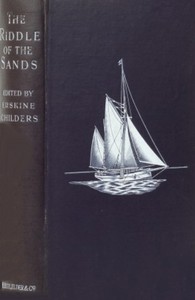
That gray afternoon, I kept returning to the moment Marguerite waits in Orczy’s dark hallway, counting breaths between lantern flashes. Her stillness felt like the North Sea fog I’d once imagined while reading The Riddle of the Sands — Text and Context. Both stories linger in that suspended hush before action, where worry and hope share the same quiet room.
Build a private reading journal entry for this title.