About 490 minutes
The Arrow of Gold: A Story Between Two Notes — Context and Discussion
Wandering Heroes Classic Adventures
112,550 recorded words. 4 minutes difference from this book's estimate.
View Gutenberg source #1083
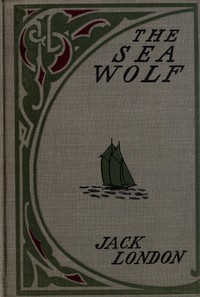
The catalog record for The Sea-Wolf — Key Ideas to Explore provides practical reading context through 111,601 words, 8 hr 6 min estimated reading time, and 40 detected text sections.
The text analysis averages about 15.9 words per sentence, while the detected sections provide another way to judge how the source is divided.
Project Gutenberg metadata also associates the work with “Sea stories,” connecting these edition facts with the source record’s subject description.
Explore this collection
These alternatives are selected using recorded categories and estimated reading time.
About 490 minutes
Wandering Heroes Classic Adventures
112,550 recorded words. 4 minutes difference from this book's estimate.
View Gutenberg source #1083About 501 minutes
Wandering Heroes Classic Adventures
115,188 recorded words. 15 minutes difference from this book's estimate.
View Gutenberg source #2360About 559 minutes
Wandering Heroes Classic Adventures
128,427 recorded words. 73 minutes difference from this book's estimate.
View Gutenberg source #1752Search stored excerpts and compare books → Choose by your preferences →
Choices use stored catalog measurements. Estimates vary with reading speed. A shared category is a catalog label, not a claim that two books have the same argument or literary quality.
Search reads excerpt text stored with this catalog and links to its associated Gutenberg record. The connection is stored in the site database; this tool does not recheck that every excerpt is word-for-word identical to that external record. Excerpt search does not cover every chapter and does not verify historical publication dates.
Catalog snapshot checked: 2026-09-25. Coverage: 93 public books, 93 available source excerpts.
Read the complete public-domain text at its original source.
Read on Project GutenbergThe Sea-Wolf opens not at sea but in fog, with a literary critic named Humphrey Van Weyden riding a ferry across San Francisco Bay. The fog is described as a "mystery" that lays hold of his imagination, and he reflects comfortably on the division of labor that lets him study Poe while pilots study tides. Within pages, that division collapses: a collision sinks the ferry, and Van Weyden is rescued by the seal-hunting schooner Ghost, commanded by the brutal Wolf Larsen. The transition from urban ferry to isolated ship is abrupt, and London uses the shift to establish a central structural pattern—movement between enclosed, reflective spaces and exposed, violent ones.
The first chapter establishes a pattern of enclosure and exposure that recurs throughout the novel. Van Weyden begins inside a ferry, then stands on the forward upper deck "directly beneath the pilot-house," a liminal space between shelter and open air. The fog isolates him visually yet leaves him "dimly conscious" of the pilot above—a hierarchy of knowledge he accepts without question. When the collision occurs, the fog becomes a literal and figurative barrier: Van Weyden cannot see the approaching ship, and his intellectual confidence proves useless. London repeats this structure later when Van Weyden is confined to the Ghost's cabin, then forced onto deck during storms or confrontations. Each movement from interior to exterior tests his assumptions about order and safety.
Small boats appear at critical junctures, always carrying characters in extreme situations. The most extended example is the pursuit of the escaping sailors Leach and Johnson. Their open boat is described as a "frail craft" and a "cockle-shell," tossed by "hissing combers" while Wolf Larsen toys with them from the deck of the Ghost. The scene is structured as a chase: the schooner sails away, then heaves to, then runs before the wind, forcing the small boat to beat windward. London emphasizes the asymmetry of power—the schooner's crew watches from safety while the men in the boat face "imminent peril." The boat becomes a visual emblem of helplessness, and Larsen's laughter underscores his control over life and death. Earlier, Van Weyden himself is pulled from the water in a similar small boat, linking his rescue to the later victims' ordeal.
London varies the closeness of Van Weyden's narration to create tension. In the ferry scene, the narrator reports his own thoughts directly: "I remember thinking how comfortable it was." After the rescue, the narration remains intimate during interior monologues but pulls back during action sequences. During the boat chase, for instance, Van Weyden describes Johnson's "face white and anxious" and Leach's "old and implacable snarl of hatred" as if from a distance, even though he stands beside Larsen on the poop. The effect is cinematic: the reader sees the boat as Van Weyden sees it, but his emotional response is filtered through observation. Later, the sailor Louis mutters asides that Van Weyden reports but does not fully understand, creating a gap between the narrator's optimism and the crew's fatalism.
London plants a small, ironic detail in the opening pages that echoes later themes. Van Weyden notices "with greedy eyes a stout gentleman reading the Atlantic, which was open at my very essay." The essay—on Poe—represents Van Weyden's intellectual identity, yet the gentleman never speaks, and the essay is never mentioned again. The detail underscores Van Weyden's initial belief that literary analysis matters, a belief the voyage will systematically dismantle. Later, when Larsen quotes philosophy and mocks Van Weyden's learning, the forgotten essay becomes a silent measure of how far the narrator has traveled from his former life. The stout gentleman, like the ferry itself, is left behind in the fog, never to reappear.
Readers attentive to London's structural choices will notice how each chapter tends to begin with Van Weyden in a contained space—a cabin, a berth, a corner of the deck—before moving him into confrontation or observation. The fog that opens the book never fully lifts; it recurs as a metaphor for the limits of knowledge. Tracking these movements and the recurring image of the small boat offers a way into the novel's tension between intellect and brute force, without reducing it to a simple allegory.
That gray afternoon, The Sea-Wolf — Key Ideas to Explore kept circling the strange pull between helpless drift and iron command, fog rolling over every page. I closed it, restless. My hand wandered to The Two Captains — Context and Discussion, which felt less like a jump than a quiet exhale—another storm, another helm, the same old ache of men deciding who steers.
A brief reflection can help important ideas stay with you longer.