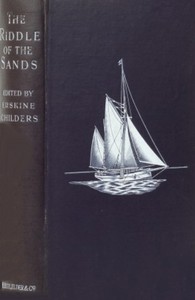
About 341 minutes
The Light That Failed — Story, Setting & Ideas
Wandering Heroes Classic Adventures
78,276 recorded words. 93 minutes difference from this book's estimate.
View Gutenberg source #2876
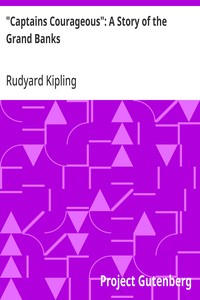
This digital edition of "Captains Courageous": A Story of the Grand Banks — Inside the Classic is described by source-level measurements including 56,987 words, 4 hr 8 min estimated reading time, and 6 detected text sections.
The text analysis averages about 15.1 words per sentence, while the detected sections provide another way to judge how the source is divided.
Project Gutenberg metadata also associates the work with “Sea stories,” connecting these edition facts with the source record’s subject description.
Explore this collection
These alternatives are selected using recorded categories and estimated reading time.
About 341 minutes
Wandering Heroes Classic Adventures
78,276 recorded words. 93 minutes difference from this book's estimate.
View Gutenberg source #2876About 364 minutes
Wandering Heroes Classic Adventures
83,714 recorded words. 116 minutes difference from this book's estimate.
View Gutenberg source #3782About 378 minutes
Wandering Heroes Classic Adventures
86,759 recorded words. 130 minutes difference from this book's estimate.
View Gutenberg source #2166Search stored excerpts and compare books → Choose by your preferences →
Choices use stored catalog measurements. Estimates vary with reading speed. A shared category is a catalog label, not a claim that two books have the same argument or literary quality.
Search reads excerpt text stored with this catalog and links to its associated Gutenberg record. The connection is stored in the site database; this tool does not recheck that every excerpt is word-for-word identical to that external record. Excerpt search does not cover every chapter and does not verify historical publication dates.
Catalog snapshot checked: 2026-09-25. Coverage: 93 public books, 93 available source excerpts.
Read the complete public-domain text at its original source.
Read on Project GutenbergThe story opens not on the fishing grounds but in the smoking-room of a transatlantic liner, where passengers dissect fifteen-year-old Harvey Cheyne with clinical disdain. Kipling establishes the boy through others' words before he appears: a German recommends "ropes' ends," a Philadelphian notes his two-hundred-dollar monthly allowance, and the collective verdict is that he is a nuisance. When Harvey finally enters—"a half-smoked cigarette hanging from one corner of his mouth," dressed in cherry-coloured blazer and red stockings—the reader sees exactly what the men described. This layered introduction, filtered through multiple perspectives, sets a pattern for the novel: character is revealed through dialogue and action rather than authorial summary.
The opening chapter confines nearly all its action to the liner's smoking-room, a space of male gossip and judgment. Kipling uses the passengers' conversation to sketch Harvey's background—his father's railroads, mines, and shipping, his mother's restless travel—without ever showing the boy in his natural element. The men speak in overlapping voices: the German growls, the New Yorker drawls, the Philadelphian supplies dry facts. This polyphonic technique gives the reader a composite portrait before Harvey utters a word. When he finally appears, his cheap smartness and bravado confirm the diagnosis. The smoking-room functions as a microcosm of the world Harvey has known: insulated, critical, and utterly detached from the labor that produces wealth.
Once aboard the schooner We're Here, the narrative shifts to a different kind of talk. The fishermen tell stories that are part memoir, part legend, and part practical joke. Long Jack's tale of Counahan the Navigator—who mistook Cape Clear for the Grand Banks and sailed to Ireland—is a masterpiece of dialect comedy, full of repeated phrases ("Sufferin' Christianity!") and deadpan absurdity. Manuel's gentler anecdote about selling fish off Liberia offers a contrasting rhythm. These embedded narratives do more than entertain; they teach Harvey (and the reader) the crew's values: resourcefulness, humor, and a flexible relationship with geography. The stories also reveal how the men understand their own work—as a series of improvised voyages where luck and nerve matter as much as skill.
Kipling structures the novel as a series of spatial transitions: from the liner's smoking-room to the schooner's deck, from Harvey's pampered past to the cramped forecastle, from the fog of the Banks to the clear waters off Gloucester. Each shift is marked by a change in sensory detail. The opening fog and whistles give way to the salt spray and creaking blocks of the fishing vessel. Harvey's cherry-coloured blazer is replaced by oilskins. The novel's movement is not merely physical; it traces a moral geography. The smoking-room represents idle judgment, while the schooner demands participation. The excerpts show Kipling's care in rendering these transitions through concrete objects—a cigarette, a rope's end, a lead-line—rather than abstract commentary.
Two images recur across the excerpts: the rope's end and the lead-line. The German passenger recommends "ropes' ends" as discipline; later, the crew's stories are full of practical tools—sounding leads, kegs of rum, schooners under sail. These objects anchor the novel's themes in physical reality. The lead-line, in particular, becomes a symbol of orientation: Counahan misreads it and ends up in Ireland; the We're Here crew uses it to find fish. Kipling does not moralize about these tools; he lets them accumulate meaning through repetition. Similarly, talk itself is a recurring motif. The smoking-room gossip, the fishermen's yarns, and the dialect banter all show characters defining themselves through speech. The novel's structure thus mirrors its content: a story about learning to read the world is told through voices that must be interpreted.
Readers approaching Captains Courageous should attend to the interplay between what is said and what is shown. Kipling rarely tells you directly that Harvey is changing; instead, he lets the boy's responses to the crew's stories and the work of fishing imply the transformation. The novel rewards attention to dialect, to the rhythm of dialogue, and to the way objects—a lead-line, a schooner's name—carry weight across chapters. Treat the embedded tales not as digressions but as compressed lessons in the values of the Banks.
Reading Captains Courageous, I remembered my grandfather’s hands mending nets—how he’d hum while splicing rope, a quiet rhythm that smoothed even his hardest days. Harvey’s transformation felt familiar, like when El Dorado: An Adventure of the Scarlet Pimpernel — Context and Discussion reminded me that courage often wears patience, not fireworks. Both books whisper that change doesn’t shout—it just shows up in the work.
Your answers remain private and are stored only in this browser.