About 364 minutes
Huntingtower — Edition Insights
Wandering Heroes Classic Adventures
83,714 recorded words. 23 minutes difference from this book's estimate.
View Gutenberg source #3782
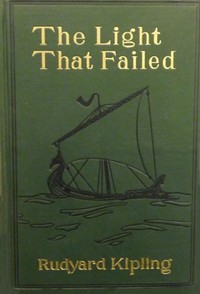
For The Light That Failed — Story, Setting & Ideas, the stored edition analysis reports 78,276 words, 5 hr 41 min estimated reading time, and 17 detected text sections.
The text analysis averages about 13.9 words per sentence, while the detected sections provide another way to judge how the source is divided.
Project Gutenberg metadata also associates the work with “Man-woman relationships -- Fiction,” connecting these edition facts with the source record’s subject description.
Explore this collection
These alternatives are selected using recorded categories and estimated reading time.
About 364 minutes
Wandering Heroes Classic Adventures
83,714 recorded words. 23 minutes difference from this book's estimate.
View Gutenberg source #3782About 378 minutes
Wandering Heroes Classic Adventures
86,759 recorded words. 37 minutes difference from this book's estimate.
View Gutenberg source #2166About 381 minutes
Wandering Heroes Classic Adventures
87,522 recorded words. 40 minutes difference from this book's estimate.
View Gutenberg source #2785Search stored excerpts and compare books → Choose by your preferences →
Choices use stored catalog measurements. Estimates vary with reading speed. A shared category is a catalog label, not a claim that two books have the same argument or literary quality.
Search reads excerpt text stored with this catalog and links to its associated Gutenberg record. The connection is stored in the site database; this tool does not recheck that every excerpt is word-for-word identical to that external record. Excerpt search does not cover every chapter and does not verify historical publication dates.
Catalog snapshot checked: 2026-09-25. Coverage: 93 public books, 93 available source excerpts.
Read the complete public-domain text at its original source.
Read on Project GutenbergThe novel opens with a nursery-rhyme epigraph and a scene of two orphans, Dick Heldar and Maisie, pooling their savings to buy a Belgian revolver. This early detail—a child's desperate bid for agency under a neglectful guardian—establishes a pattern of characters grasping for control in circumstances that resist it. Kipling's prose shifts between the children's clipped, practical dialogue and the narrator's blunt assessment of the guardian's cruelty: she gave Dick 'first aversion and then hate.' The revolver, a tool of imagined power, foreshadows the novel's preoccupation with instruments—paintbrushes, war correspondence, even blindness—that both enable and fail their users.
From the opening chapter, relationships in The Light That Failed are negotiated through transactions. Dick and Maisie form a 'syndicate' to buy cartridges, with Maisie contributing half a crown because 'boys ought to do these things.' Later, their adult interactions retain this ledger-like quality: Dick asks Maisie for 'leave to go' and wonders if he has her 'permission.' The guardian's exploitation of Dick's allowance—she 'made her profit of the allowances supposed to be expended on his clothes'—extends this pattern into a critique of how care is monetized. Even artistic labor is framed as a debt: Maisie declares she 'must do my work,' and Dick's offer to paint a rival Melancolia becomes a bid to 'humble her inordinate vanity.' Kipling presents love, art, and duty as accounts that can never be balanced.
The catalog lists blindness as a subject, and the excerpts hint at its role not merely as a plot point but as a formal constraint. Dick's later blindness is prefigured by his inability to see Maisie clearly: he calls her 'stronger than I am' while dismissing her artistic power, and he circles a tree in the Park, 'swearing audibly,' unable to free his mind from her. The novel's title itself—The Light That Failed—suggests a failure of vision that is both literal and metaphorical. Kipling uses blindness to test the reliability of perception: characters misread each other's motives, and the narrator withholds full access to their inner lives. The reader, like Dick, must piece together meaning from partial evidence.
Dick's experience as a war correspondent in Sudan—listed in the catalog—is not directly excerpted, but its residue permeates the London scenes. He tells Maisie she 'like[s] blood and bones,' a phrase that links his war work to his artistic style. The novel contrasts the immediacy of combat with the detached labor of the studio: Dick's Arabic curses, learned in Port Said, erupt when English fails him, suggesting a self forged in violent places. Maisie, by contrast, works from 'fancy heads' and literary sources like The City of Dreadful Night. Kipling sets these two modes of seeing—the correspondent's documentary eye and the painter's idealizing one—in tension, without resolving which yields truer art.
Readers should attend to how Kipling withholds interiority. Characters often speak past each other, and the narrator reports action more than motive. The epigraph's nursery-rhyme fatalism—'that's how it all began'—invites scrutiny of how small decisions cascade. Pay attention to objects: the revolver, the unfinished canvas, the tree Dick confides in. They carry more weight than the characters admit.
There’s something about Dick Heldar’s fading sight that lingers, that ache between ambition and the human touch. It makes me think of quieter evenings spent with another old favorite, where the seams of the story are just as gently laid bare. Sometimes returning to familiar pages feels like watching light shift on a wall. Huntingtower — Edition Insights holds that same unhurried, almost tender quality.
Use these questions to collect your thoughts before moving on.